Send As SMS

05 October 2006

Ubik (P. K. Dick, 1969)

The novel takes place in the North American Confederation in 1992. Joe Chip, a debt-ridden technician for Glen Runciter's "prudence organization," which employs people with the ability to block certain psychic powers (for instance, an anti-telepath can prevent a telepath from reading a client's mind). Runciter runs the company with the assistance of his deceased wife Ella, who is kept in a state of "half-life," a form of cryonic suspension that gives the deceased person limited consciousness and communication ability.
Business magnate Stanton Mick hires Runciter’s company to secure his Lunar facilities from telepaths. Runciter, Chip and others go then to the moon to discover that the assignment is a trap, presumably set by Runciter’s business rival, Ray Hollis, who leads a group of psychics. A bomb explodes killing apprentely Runciter. Chip and his colleagues rush back to Earth to place him in half-life.
Afterwards, the group begins to experience strange shifts in reality. Consumables, such as milk and cigarettes, begin to expire prematurely. Runciter's face appears on coins and they receive strange messages from him, in writing and on television. Group members are found dead, in a gruesome state of decomposition.
Messages from Runciter indicate that Ubik may be their only hope...

Labels:

15 September 2006

The Man in the High Castle (P. K. Dick, 1962)

The Second World War has been over for 17 years... the Allies have lost it... the African continent is virtually wiped out, the Mediterranean drained to make farmland, the United States divided between the Japanese and the Nazis... The point of divergence between the world of The Man in the High Castle and actual history is the assassination of President Franklin D. Roosevelt in 1933.
In the neutral zone that divides the rival superpowers in America lives Hawthorne Abendsen, the author of an underground best-seller The Grasshopper Lies Heavy. Living in the castle of the book's title in the Rockies, Abendsen has consulted the ancient Chinese Book of Changes, the I Ching, and used his readings of it to write the Science Fiction book, which describes an alternate-reality in which America and the Allies win the Second World War, although stilldifferent from "our" reality. His book has become a popular success, so much so that the Nazi high command want him assassinated.
Does 'reality' lie with him, or is his world just one among many others?

Rating: 9/10

Labels:

A Scanner Darkly (P.K. Dick, 1977)

Substance D - otherwise known as Death - is the most dangerous drug ever to find its way on to the black market. It destroys the links between the brain's two hemispheres, leading first to disorentation and then to complete and irreversible brain damage. Bob Arctor, undercover narcotics agent, is trying to find a lead to the source of supply, but to pass as an addict he must become a user, and soon, without knowing what is happening to him, he is as dependent as any of the addicts he is monitoring.

Rating: 8/10

Labels:

The Three Stigmata of Palmer Eldritch (Philip K. Dick, 1965)

Under the authority of the United Nations, humankind has colonized every habitable planet and moon in the solar system. Life for most colonists is physically daunting and psychologically monotonous so the UN must draft individuals to colonize. Most colonists entertain themselves using “Perky Pat” dolls and the multitude of accessories manufactured by Earth-based P.P. layouts.
The company also secretly creates Can-D, an illegal but widely available hallucinogen that allows the user to "translate" into Perky Pat (if the user is female) or her boyfriend Walt (if male). This allows colonists to experience an idealized version of life on Earth in a collective unconscious hallucination. P.P. layouts employs several precogs to determine if possible new Perky Pat accessories will be popular.
Life on Earth is also harsh as the global temperature has risen to a level where one can no longer be outdoors without a personal air conditioning unit.
At the novel’s beginning, renegade industrialist Palmer Eldritch has traveled to the inhabited Proxima Centauri star system in search of a sellable product. He has been gone for a decade...

Rating: 8/10

Labels:

Time Out of Joint (P. K. Dick, 1959)

Ragle Gumm he lives in 1959 in a quiet American suburb. His unusual occupation consists of repeatedly winning the cash prize in a local newspaper competition, "Where will the little green man be next?" However, everyday objects suddenly disappear leaving behind only a small slip of paper with the name of the object printed on it. There are other mysterious aspects: children exploring the basement of an old, ruined house nearby find a pile of magazines. One features an actress, apparently well-known, who Gumm has never heard of, named Marilyn Monroe.
Gumm gradually begins to suspect that his life is an illusion, constructed around him for the express purpose of keeping him docile and happy. But then what is the real world?

Rating: 8/10

Labels:

The Collected Short Stories (P. K. Dick)

1st volume: From the previously unpublished "Stability" (1947) to "Nanny" (1952), these are science-fiction stories, fantasies, unique gimmicks and oddities. "Roog" is a dog's-eye view of refuge collectors, "The Preserving Machine" a chill allegory on the nature of change, while the title story concerns a psychic Martian with a remarkable survival mechanism.
Inevitably some of the SF elements have dated, but it doesn't matter: Dick wasn't predicting the future, but shining a bright, sometimes mordant light on the baffling nature of reality. Dick, who said he wrote about "The shock of dysrecognition", was a true original, a writer who expanded to possibilities of fiction. This collection is essential reading for anyone who wants to stretch the horizons of their universe.
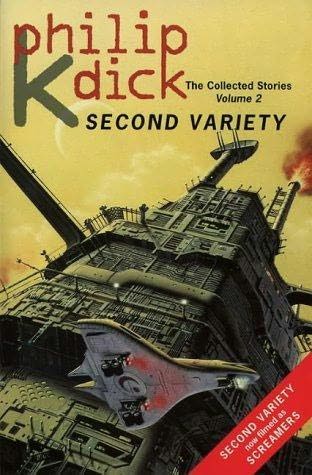
2nd volume: 27 stories from August 1952 to April 1953. In this extraordinarily creative period Dick produced a seemingly endless stream of breathtakingly audacious ideas, delving ever deeper into what would become major themes of his career: alienation and the nature of humanity. In "Second Variety" Hendricks and the Russian soldier Tasso fight a desperate battle for survival in a relentless future war against machine foes. The story is a taut, Cold-War-era ancestor of The Terminator. In 1976 Dick wrote "For me 'Human Is' is my credo". Lester is an emotionless workaholic devoted to making poisons for the military. When he returns from Rexor IV a literally changed man his wife faces a unique decision. The final story "Prominent Author" is an ingenious tale of instantaneous transport with strange repercussions in time.
3rd volume: The 23 stories here were written in 1953-4 and show one of science fiction's finest writers in prolific mastery of his craft. While Dick's deep concerns with perception, reality and the nature of humanity frequently recur he rarely fails to bring a fresh idea, a new perspective, a different twist to these very varied stories. Humour is never far away, reflecting his compassion for ordinary people battling often bizarre cosmic conundrums. "Upon the Dull Earth" glitters with dark poetry, a chilling fantasy about a woman who summon angels and changes the world. "The Golden Man", a compelling thriller about a mutant on the run, caused controversy on original publication, the implication that evolution will leave us behind provoking genuine anger. The title of one story, "A World of Talent", is an apt description of the brilliance Dick poured into these amazing stories.
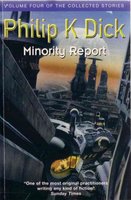
4th volume: This volume covers a wide span, from late 1954 through to 1963, the years during which Dick began writing novels prolifically and his short story output lessened. The title story of this collection has been made into the Steven Spielberg-directed movie of the same name, while "The Days of Perky Pat" inspired one of Dick's greatest works, the novel The Three Stigmata of Palmer Eldritch; The Penultimate Truth grew from "The Mold of Yancy".
5th volume: 25 stories written between 1963 and 1981, just a few months before he died, which include two stories which have been turned into films: the title story, filmed as "Total Recall", and "The Little Black Box", which grew into his masterpiece "Blade Runner".

Labels: